 Krka Waterfalls Croatia
The Best Time to Visit Krka Waterfalls: Month by Month
The best time to visit Krka waterfalls is June or September: the park boat from Skradin runs its full schedule, the river and the sea are warm enough for the legal swims the falls no longer offer, entry prices sit below the 40 EUR summer peak, and the boardwalks carry two-thirds of the July load. This page runs the calendar month by month - temperatures, ticket prices, boat hours, crowd behaviour - so a Krka waterfalls tour can be booked for the right window rather than the leftover one. As of September 2026, all prices and schedules below are checked against the park's own published information.
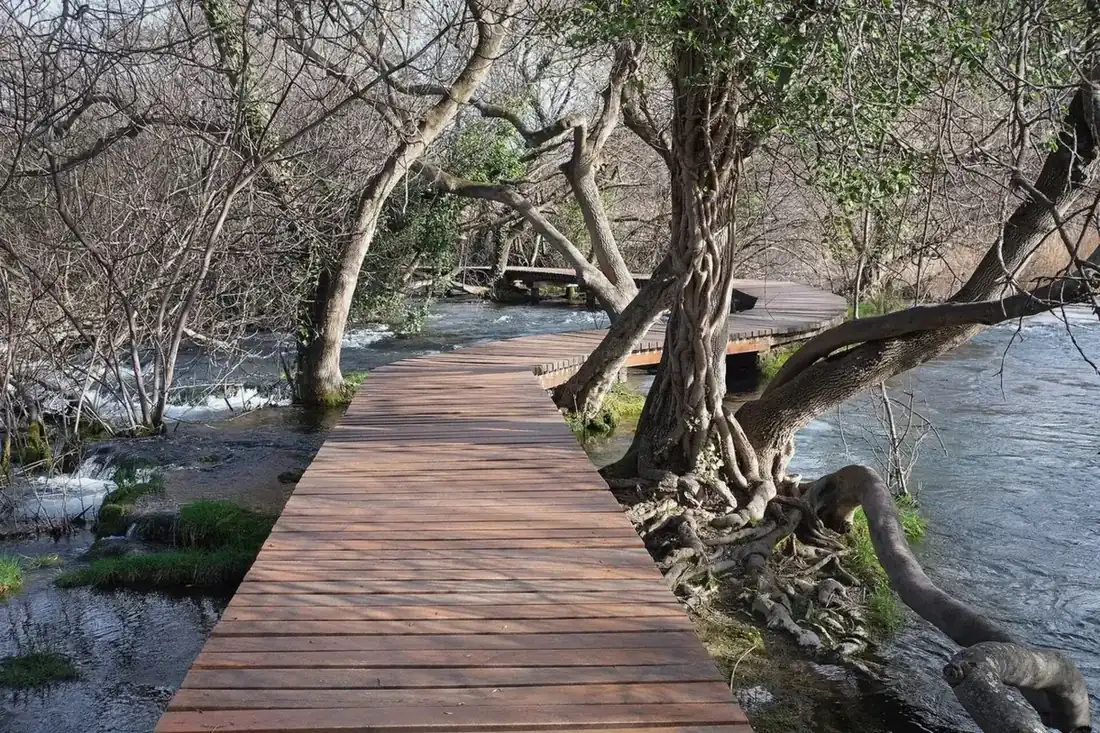
Skradin, the gateway town on the lower gorge - park-boat quay, fortress and the legal river beach. Photo: kallerna, Wikimedia Commons CC BY-SA 4.0.
Quick answer June and September win - the month-by-month arithmetic
June and September are the best months for a Krka waterfalls tour: the full boat-and-tour schedule runs, the Skradin swim is warm, and entry sits at 20 EUR in the shoulder months against the 40 EUR July-August peak. May and October are the value fringes - cheap and quiet with cold-water luck required. Winter visits (7 EUR) walk in without the park boat. The hour matters as much as the month: before 10:00 or after 15:00 beats the coach wave in any season.
Key takeaways
- The sweet pair: June and September - flagship tour dates sell out here too, just slower.
- Price the month: the official entry swings from 7 EUR to 40 EUR across the year - a family of four saves real money by picking October.
- Swim months are June-September: the falls themselves have been dry of swimmers since January 2021 - the warm swims happen at Skradin or the coast.
The Short Answer: June and September
Every variable that matters at Krka - schedule, water, price, crowd - aligns twice a year, and it is the same pair every year: June and September. The park boat from Skradin runs 1 April to 31 October, so any month inside that window has the classic access; June and September sit far enough from the July-August peak that the wooden walkways breathe, while the water on both sides - river at Skradin, sea at Primošten - holds swimming temperature. The pricing table rewards the same pair: the official entry runs 20 EUR in the shoulder months and 40 EUR at the summer peak, so a June visit saves 20 EUR a head before a single tour discount.
May and October are the honest fringes: cheapest quiet months with everything open, but the water runs cold and the guides' own warnings say so - the guided falls-and-Skradin day's listing prints that April and most of May are too cold for the swim. Winter is a different visit: the boat stops, the gates drop to 7 EUR, and the falls are walked, not ferried - magnificent under a January fog, and empty in a way no summer visitor will ever see.
Month by Month at the Falls
The calendar below is the whole argument in one grid: air temperature at Skradin, the official adult entry price, what runs, and what the month is actually for. Two reading notes. First, the entry price is the park's own published figure - tours collect group rates in cash that land lower, but the month shape is the same.
Second, 'crowd load' is relative: even the quietest July morning out-peoples the loudest September afternoon, which is why the pair at the top of this page stays unbeaten.
The Krka year at a glance
Temperatures are typical air values for the Skradin area; entry prices are the official 2026 list, checked September 2026.
| Month | Air temp | Adult entry | What runs | The month is for |
|---|---|---|---|---|
| January | 6C | 7 EUR | Walk-in only | Fog, frost and the falls to yourself |
| February | 7C | 7 EUR | Walk-in only | The empty-park month; water at its coldest |
| March | 11C | 20 EUR (from mid-month) | Boat from 1 April (late March weekends) | First proper visits; brown-water luck after rain |
| April | 15C | 20 EUR | Full boat schedule | Green season; too cold to swim, best for walkers |
| May | 20C | 20 EUR | Full schedule, filling | Warm days, cool water; the last cheap month |
| June | 24C | 40 EUR | Everything, warming up | The first sweet spot |
| July | 27C | 40 EUR (30 after 15:00) | Everything at maximum | Peak crowds; early starts non-negotiable |
| August | 27C | 40 EUR (30 after 15:00) | Everything at maximum | Peak crowds; book tours weeks out |
| September | 23C | 40 EUR (30 after 15:00) | Full schedule, thinning | The second sweet spot - warm water, soft light |
| October | 18C | 20 EUR | Full schedule to month's end | Value month; cold-water swims only |
| November | 12C | 7 EUR | Boat stops (31 Oct) | Walk-in visits; the park exhales |
| December | 8C | 7 EUR | Walk-in only | Fog season; the year's starkest photos |
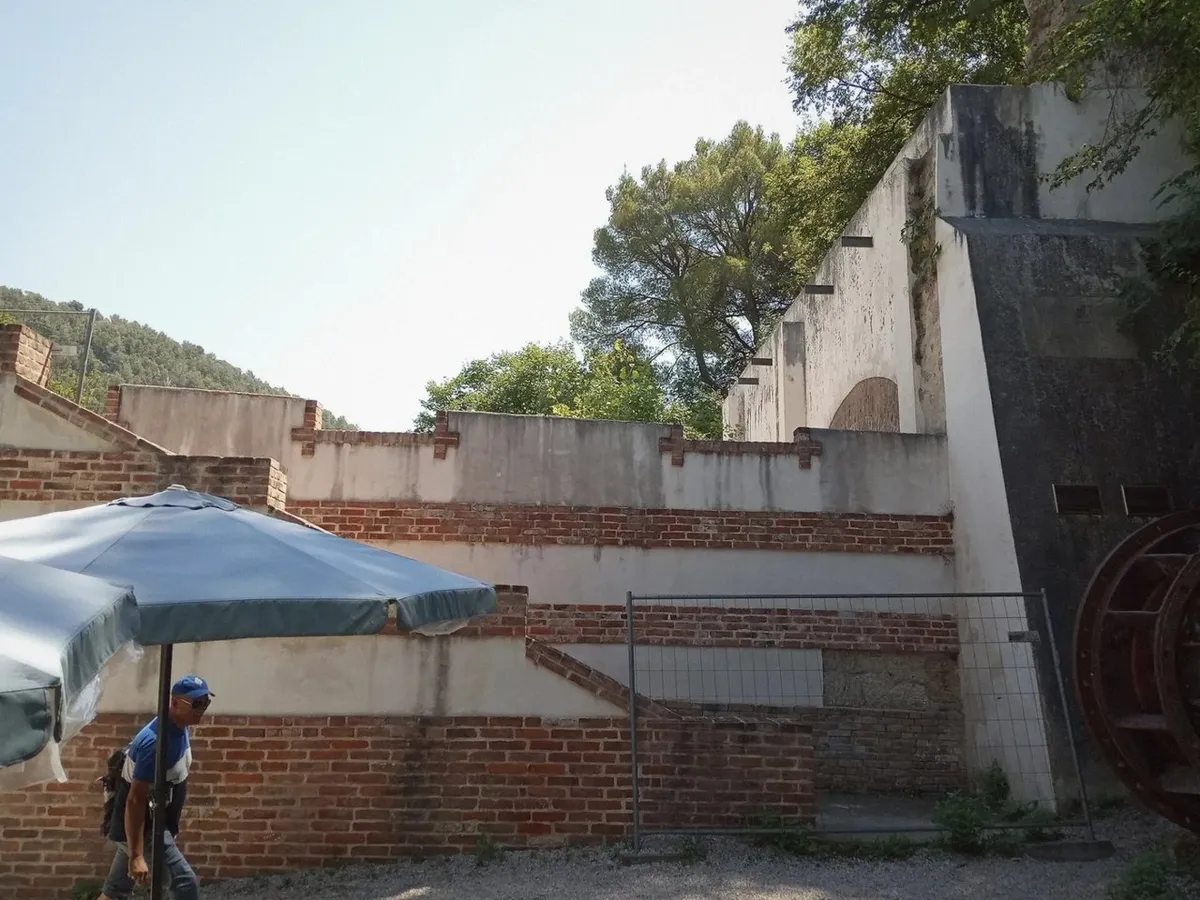
Skradin, the gateway town on the lower gorge - park-boat quay, fortress and the legal river beach. Photo: JiriMatejicek, Wikimedia Commons CC BY-SA 4.0.
The Two Clocks: Hours, Boats and the 15:00 Ticket
Within any month, the hour decides more than the day does. The park boat from Skradin runs roughly every half hour through the season, and the tour coaches synchronise to it: the boardwalks load between 10:00 and 12:00 and again mid-afternoon. The counter-programming is built into the park's own price list - after 15:00 in June-September, the adult entry drops from 40 EUR to 30 EUR - which makes the late window the connoisseur's slot: the coach wave is draining, the light turns golden on the travertine, and the ticket is cheaper.
Tour-side, the Zadar day sells both clocks outright (07:00 and 12:00 runs), the short Split day lands at the falls after the first wave, and the morning flagship simply accepts the load and out-schedules it with three park hours. Winter inverts everything: no boat, walk-in entry from Lozovac or Skradin, and the falls belong to whoever brought a scarf.
Water, Weather and the Swim Stop
The month also decides the swim - and since January 2021 the swim never happens at the falls. June through September, the substitutes run warm: Skradin's river beach sits around bath temperatures through July and August, and Primošten's pebble beaches - the sea stop on the flagship and budget days - hold the Adriatic at its swimmable best from late June to mid-September. May and October swim on luck and stubbornness; the operators say so in their own listings.
Rain behaves differently: Krka is one of the few waterfalls that improves with weather - a day of rain raises the cascades' volume - but it browns the water after heavy autumn blows, so the postcard green belongs to settled spells. Heat is the summer constraint: at 27C-plus, the boardwalk's shaded stretches are precious and the 2-litre water rule from the what-to-bring page is not decoration.
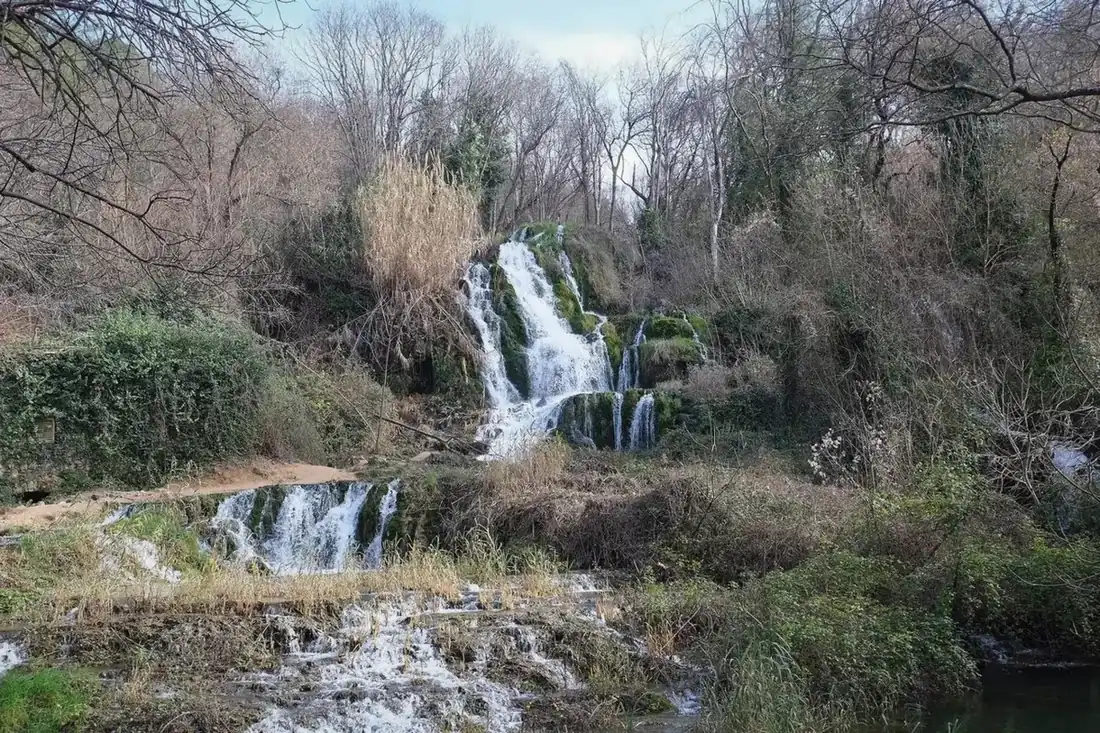
Skradin, the gateway town on the lower gorge - park-boat quay, fortress and the legal river beach. Photo: kallerna, Wikimedia Commons CC BY-SA 4.0.
Crowd Calendar: When the Boardwalks Jam
Krka's crowd is a function of three calendars. The cruise calendar puts 10,000-plus day-trippers on the Dalmatian coast any given summer weekday, and a solid share of them rides to the falls; Split's tour desks feed it. The school calendar doubles family numbers from mid-June to early September. The coach calendar is the internal one - tours land at 10:00-ish because the Skradin boat timetable says so. The counter-moves, cheapest first: pick June or September and half the problem never books itself; take an early departure (Zadar's 07:00 run is the earliest on this catalog); or drive and enter after 15:00 when the day-tours are leaving. The upstream escape - the park's own excursion boat toward Visovac and Roski slap - sells separately from the Skradinski Buk dock and empties measurably in the crowd's wake.
Booking Windows by Month
When to book is a season-shaped question. July and August: two to four weeks out for shared tours - the flagship's summer Saturdays go first, and the private farm-lunch day closes earlier still. June and September: days to a week out is comfortable; the calendar breathes. May and October: book when the weather forecast earns it - tours run on reduced flexibility in shoulder weeks and some operators consolidate departures. Winter: walk-up logic; the tours that run run daily, and the park's 7 EUR gate needs no reservation. Across all of it, the free-cancellation-24h tier is the standing insurance: book the good-weather bet early, drop it free if the forecast breaks.
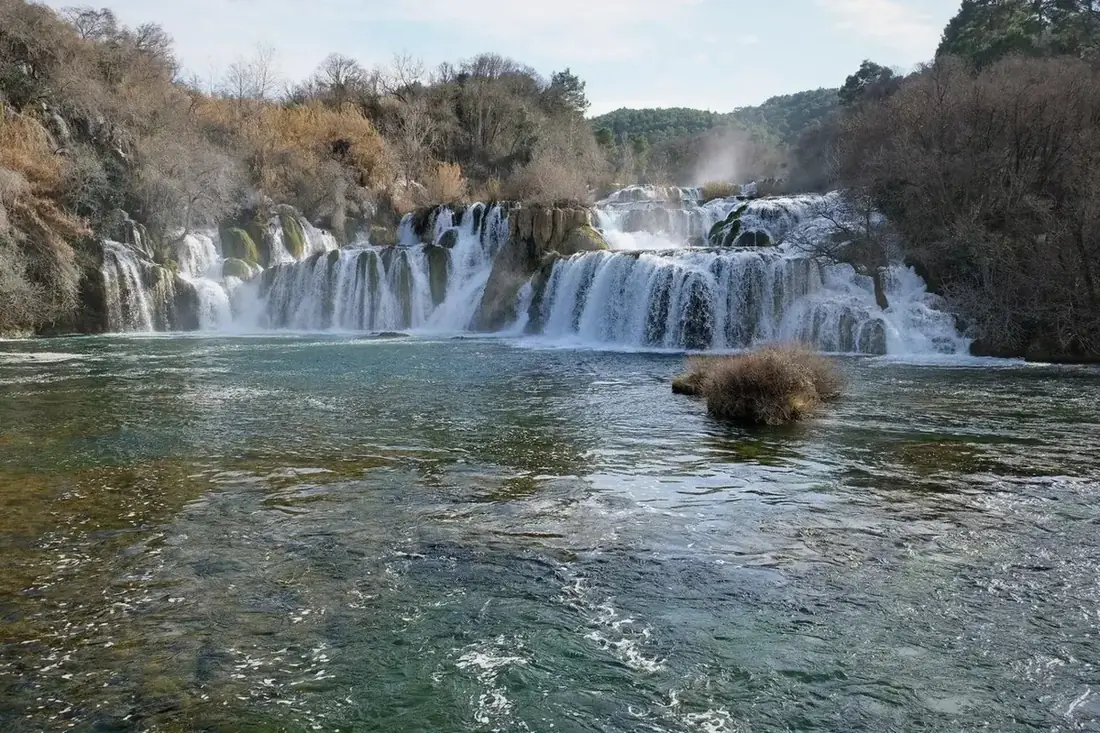
Skradin, the gateway town on the lower gorge - park-boat quay, fortress and the legal river beach. Photo: kallerna, Wikimedia Commons CC BY-SA 4.0.
The calendar, in one sentence: pick June or September if the trip allows, pick the hour before ten or after fifteen if it does not, and let the month's entry price - not the tour price - be the number that surprises you in the right direction.
Skradin, the gateway town on the lower gorge - park-boat quay, fortress and the legal river beach. Photo: kallerna, Wikimedia Commons CC BY-SA 4.0.
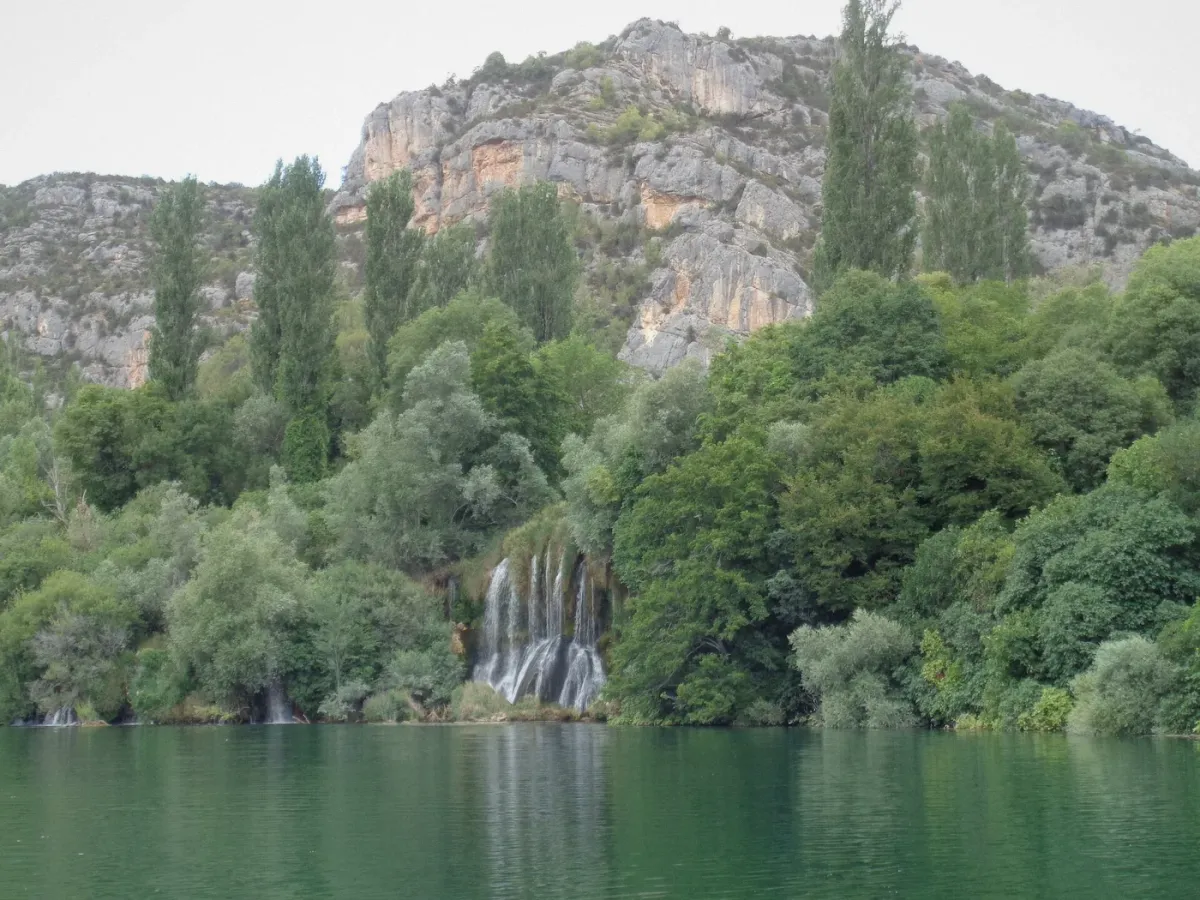
Roški slap, the gentler second barrier upstream - the low-crowd escape in every month. Photo: Silverije, Wikimedia Commons CC BY-SA 4.0.
Opening Hours and the Boat Timetable by Season
The month decides more than the price - it decides the clock. The park's working hours stretch with the daylight: winter visits walk in through a short day, the shoulder seasons run long mornings to late afternoons, and the June-August peak holds the gates open into the evening, which is what makes the after-15:00 ticket tier a real strategy rather than a footnote. The Skradin boat keeps its own season inside that calendar: it sails from 1 April to 31 October, roughly every half hour through the middle of the day, thinning at the shoulders of each day.
The practical table below is the planning version; the park's own pages carry the binding timetable, and the ticket page (/krka-waterfalls-tickets/) carries the prices that move with these same months. Two timing habits make the hours work for you rather than against you: arrive with the boat rather than with the coaches - the first sailings land at falls that still belong to the residents and the light - and treat the closing hour as a real constraint in the shoulder months, because the walk back from the falls to the gate is longer than it looks when the light goes.
The park's clocks, season by season
Hours and boat service per the park's published visitor information, checked September 2026; the after-15:00 summer ticket applies at both entrances.
| Months | Park hours (approx.) | Skradin boat | Entry tier |
|---|---|---|---|
| November-March | Short winter day, walk-in gates | Not in service | 7 EUR |
| April, May | Morning to early evening | In service, half-hourly midday | 20 EUR |
| June-September | Longest hours, into the evening | In service, most frequent | 40 EUR / 30 EUR after 15:00 |
| October | Morning to late afternoon | In service to 31 October | 20 EUR |
Weather That Changes the Day: Rain, Wind and Heat
Krka is one of the rare waterfalls that rain improves - up to a point. A wet day puts volume in the cascades, empties the boardwalks, and deepens the green; the tours run in it, the walkways drain quickly, and the honest packing answer is a shell and shoes with grip. The exceptions are the real ones: heavy autumn rains can brown the water and lift the river over the lower walkways' character, and thunderstorms close the exposed bridge sections until they pass - usually under an hour.
The summer constraint is the opposite: at Skradin's July-August highs the shaded stretches of the circuit become the itinerary's most valuable real estate, the two-litre water rule stops being a slogan, and the swim stop at Skradin or the coast turns from bonus to necessity. The bora - the northeast wind that hits the Dalmatian coast in winter and shoulder weeks - barely touches the falls themselves, because the gorge shelters them, but it can roughen the coastal drive and the Skradin quay; check the forecast for Šibenik rather than Split, since the park sits in the hinterland's pocket and runs a degree or two warmer than the coast in summer and colder in winter.
Water Levels and the Falls' Mood Through the Year
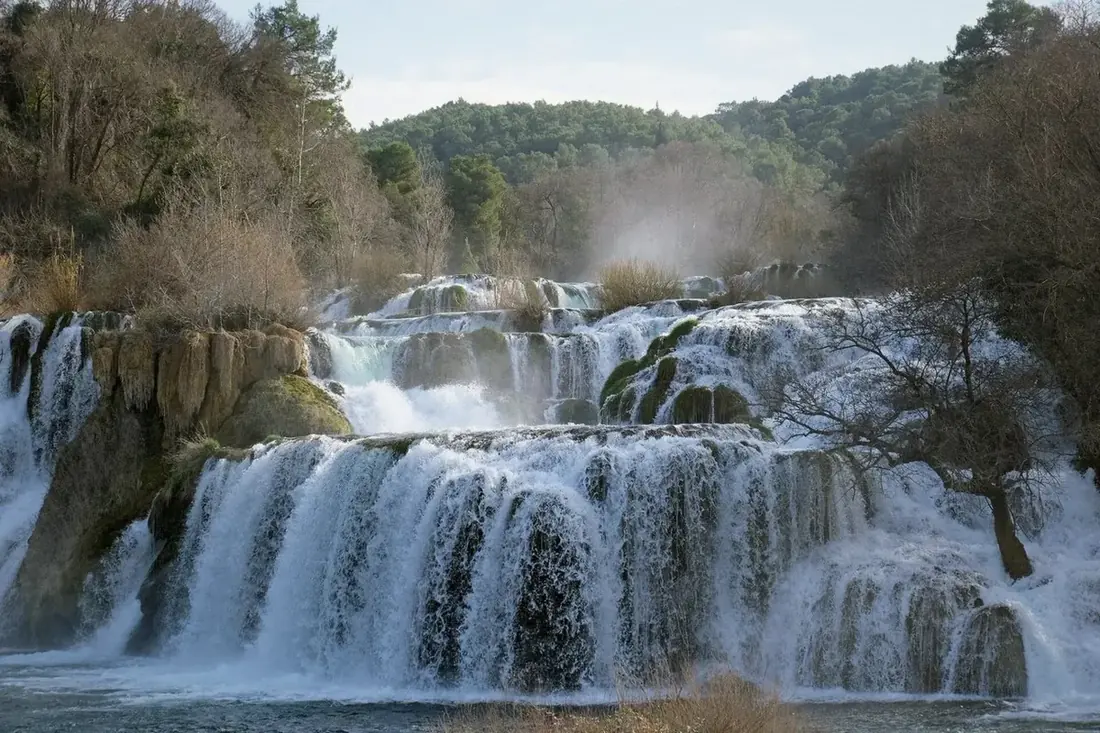
The last seasonal variable is the river itself, because Krka is a waterfall that changes character with its water budget. Spring is the voluminous season: the winter rains still drain from the karst, the cascades run broad and loud, and the travertine steps read as one continuous curtain - the photographer's month is April, before the boats fill the canvas. Summer trims the flow: by August the river runs thin enough that the falls separate into distinct ribbons, the pools go glass-clear and green, and the famous roar drops to a hush you can talk over - swimmers' weather, at the cost of the postcard's drama.
Autumn rebuilds it: the first serious rains in October refill the karst and the falls climb back toward full voice, though heavy blows can brown the water for a day or two. Winter is the mood swing - fog mornings over the cascades, frost on the boardwalk rails, and the year's starkest photographs for whoever walks in. None of this changes the visit's structure - the circuit runs year-round, the mills still turn - but it changes what you will photograph, and travellers chasing a specific Krka should chase the water budget that produces it: full and loud in spring, thin and green in August, rebuilt through the autumn rains.
A final note for the planners: the park's upstream gauge and the visitor photos tell the same story in real time - search recent Skradinski Buk images for your travel week of previous years and the water budget announces itself before you book anything. And when the numbers matter more than the mood, the park's own webcam archive settles the question in the two minutes a booking deserves.
The Shoulder-Month Compromise, Stated Honestly
For travellers whose dates are fixed outside the sweet pair, the honest compromise looks like this. May: full schedules, 20 EUR entry, green everything - and a river-beach swim that only the brave take; the guides say it plainly, and so does this page. October: the same ticket arithmetic with the sea warmer than the river and the first autumn volume back in the cascades - the connoisseur's month for walkers, the wrong month for swimmers.
Both months carry thinner boards, easier parking, and the tour market at nearly full strength; both trade the swim stop that defines the summer trips. The pattern worth naming: Krka's shoulder months reward the visitor who comes for the falls and the walk, and disappoint the one who comes for the water park - knowing which traveller your household contains is worth more than any month-by-month table on this page.
Best-Time Questions
What is the best month to visit Krka waterfalls?
June or September: full boat-and-tour schedules, warm water for the legal swims, 20-40 EUR entry depending on how early in the month, and visibly thinner boardwalks than July-August. Both months run the full tour catalogue, from the budget bus day to the private car.
How much time do I need at Krka National Park?
Two and a half to four hours covers the boardwalk circuit, the watermills and a second pass at the main barrier - which is why tours hold the park for 2-4 hours inside longer days. Less than two hours means skipping something worth seeing.
Can you still swim at Krka waterfalls?
No - swimming has been banned across the whole river since January 2021. The swim happens at Skradin's river beach or the coast (Primošten, Sibenik depending on the tour), warm enough June through September.
Is Krka worth visiting in winter?
As a different visit, yes: the 7 EUR winter entry, the fog over the cascades and empty walkways are their own experience - but the Skradin boat stops on 31 October, so winter visits walk in from Lozovac or Skradin, and no swim stop exists.
Which one is better, Plitvice or Krka?
For a coastal one-day trip, Krka: an hour from Split against Plitvice's two-and-a-half, with a swim stop attached. Plitvice is the bigger spectacle for a dedicated inland day. The full trade is in our Krka vs Plitvice guide.
Are the waterfalls worth it in the rain?
Often yes - Krka is at its most powerful a day after rain, the crowds thin, and the boardwalks turn slick, so shoes with grip matter. Only heavy autumn rains brown the water; summer storms pass in an hour.